
Why trade-show floors beat press releases
I sort tourism trade shows by what closes on the floor, not by the opening-ceremony quotes. Africa's Travel Indaba 2024 at the Inkosi Albert Luthuli ICC in Durban earns a slot in my calendar for a plain reason: it puts African product owners in front of global buyers with contracts still in draft. Patricia De Lille's opening charge - use the show to drive a positive African tourism story - is the soft frame; the hard numbers are below. This is the map of who showed up and why it mattered.
Country pavilions: 26 markets, two first-timers
Twenty-six African countries exhibited in 2024, a ground-breaking tally for the event, with Burkina Faso and Eritrea joining for the first time. New pavilions are the signal I watch: they mark governments that finally allocated export money.
- First-time countries usually bring under-explored routes and new DMCs.
- Pavilion size often tracks the following year's roadshow budget.
- Ask new entrants what visa changes made the trip possible.
Product count: 344 offerings, up 14%
The 26 countries represented 344 products on the floor, a 14% rise from 301 the year before. Product growth matters more than delegate growth for buyers - it means more inventory to package, not just more business cards.
- Track product counts to gauge how fast a region is commercializing.
- Ask each stand which products are actually bookable this season.
- Fifteen new products can rewrite a seven-day itinerary.
Buyer mix: 1,100+ buyers from 55 countries
Over 1,100 buyers representing 55 countries met more than 1,200 confirmed exhibitors. The buyer categories De Lille lists are the ones that move volume: inbound tour operators, foreign travel agents, destination marketing companies, online booking agents, transport companies, airlines, and broader travel and tourism firms.
- Match your stand's product type to the buyer category, not the reverse.
- Airlines and transport buyers need capacity numbers before stories.
- DMOs shop for experiences they can market, not for brochures.
Networking that turns into deals
De Lille frames the show as a fertile environment for closing deals that nurture partnerships and drive growth - and the floor sold out completely, which is the clearest demand signal a trade show can send. Sold-out space means waiting lists for next year's edition.
- Book next year's floor before the post-show email lands.
- Speed-networking slots beat open-floor wandering for first-timers.
- Carry one-page rate cards; nobody reads a deck at the stand.
Duration and logistics
The 2024 edition ran Tuesday 14 May through Thursday 16 May - three days, with the heaviest meeting load on the middle day. Durban's ICC complex hosts the opening ceremony and the bulk of exhibitor space; I base near the ICC and walk, because shuttle queues eat into buyer slots.
- Three days is enough only if meetings are pre-booked.
- Day two is when buyer fatigue peaks - schedule your key accounts there anyway.
- Extend a day for factory visits to KwaZulu-Natal product owners.
| Signal | 2024 figure |
|---|---|
| Exhibiting countries | 26 |
| Products shown | 344 (+14%) |
| Buyers | 1,100+ from 55 countries |
| Exhibitors | 1,200+ |
| Floor status | Sold out |
If one move has to lead, start with the buyer meetings: pre-book the inbound operators and DMOs whose categories match your product, then walk the new-country pavilions for inventory you can package next season. The opening speeches explain the politics; the meeting grid is where the African tourism story becomes bookings.
What De Lille actually asked exhibitors to do
The minister's charge was not abstract patriotism - it was a practical instruction about how to use a trade-show floor. She urged exhibitors and buyers to use the platform to drive and advance a positive African tourism story, and the subtext is operational: stop competing only on price, start competing on narrative, and let the product diversity on the floor do the talking.
- Lead with the experience, not the brochure. Buyers from 55 countries have seen every safari package; the stands that converted were the ones showing something new - a community walk, a culinary route, a cultural ceremony they could not get elsewhere.
- Tell the African story in African terms. De Lille's framing is deliberate: the narrative should come from product owners, not from foreign media rewriting it for international audiences.
- Use the floor to correct misconceptions. Many buyers arrive with outdated assumptions about safety, infrastructure or visa processes; the stand conversation is where those get updated - and where deals stall if they do not.
- Connect across borders at the show itself. The 26-country pavilion layout is designed for cross-selling; a Kenyan operator packaging a Tanzania extension needs to meet the Tanzanian product owner at the same event.
- Follow up within 48 hours. The deals that closed post-show were the ones where both sides had a written summary in inboxes before the buyer flew home.
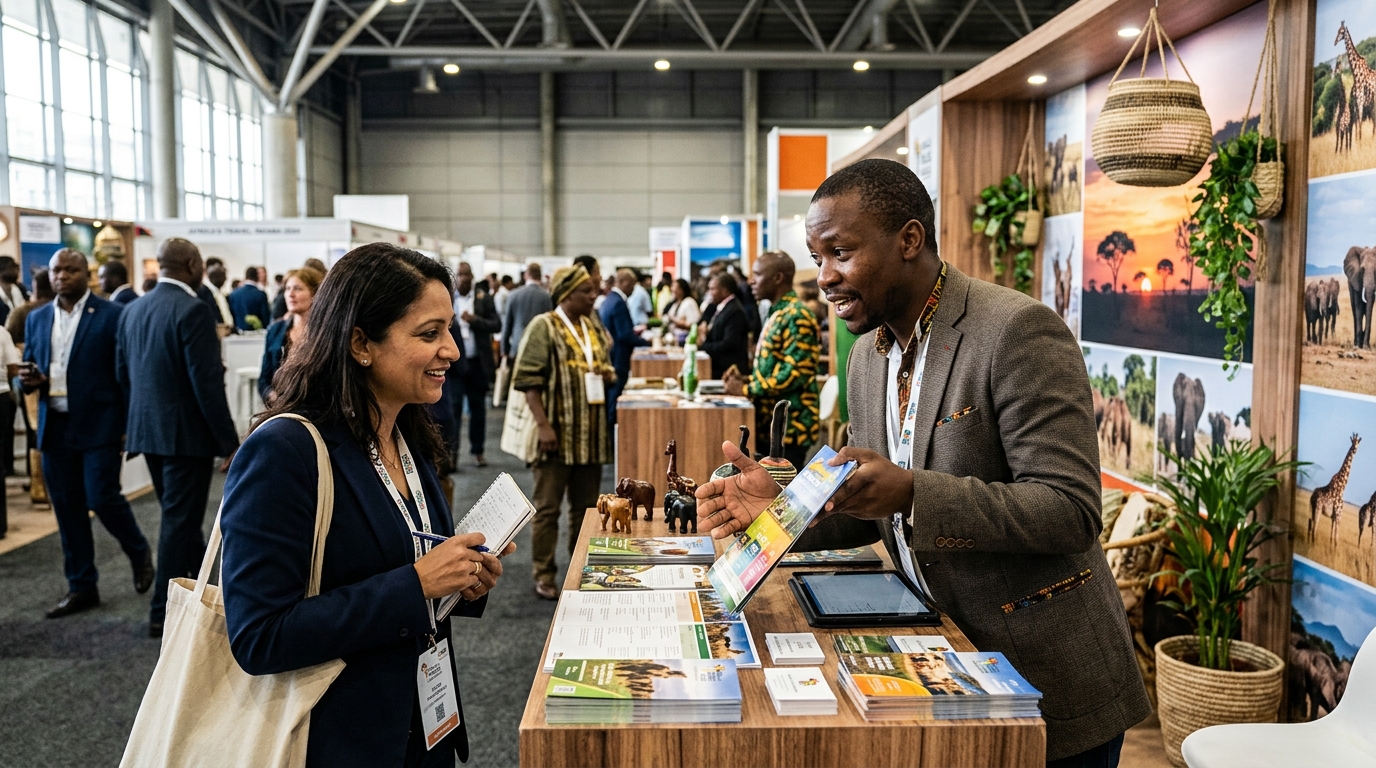
How the floor sold out - and what that signals
A fully sold-out exhibition floor is the clearest demand indicator a trade show can send, and De Lille highlighted it explicitly in her address. Sold-out means waiting lists for the next edition, pricing power for the organizer, and a signal to governments that the platform is worth subsidising.
- Waiting lists create early-bird urgency. Exhibitors who waited for post-show data in past years lost their preferred positions; the ones who pre-booked at the show itself got first pick.
- Sold-out floors justify public investment. When a trade show can point to full occupancy, the case for tourism-board subsidy becomes a line item with evidence, not a request for faith.
- Density benefits everyone. A packed floor means buyers cannot afford to skip sections; foot traffic reaches smaller exhibitors who would otherwise sit in dead zones.
- Product owners get cross-sell exposure. When a buyer walks the entire floor because every stand is full, a small operator in a corner pavilion gets the same walkthrough as the anchor exhibitor.
The buyer categories that actually move product
De Lille's list of buyer types is not ceremonial - it maps directly to who books volume. Inbound tour operators, foreign travel agents, destination marketing companies, online booking agents, transport companies, airlines, and travel and tourism firms each buy differently, and the stand that treats them identically wastes half its meetings.
- Inbound tour operators want net rates and availability. They are packaging your product into multi-day itineraries; they need the trade price, the blackout dates, and a reliable contact for changes.
- Foreign travel agents want commission structure and marketing assets. They sell to their domestic clients; high-resolution images, clear commission terms and a co-marketing offer close the conversation faster than a product pitch.
- DMOs shop for experiences they can market. Destination marketing companies are looking for what differentiates your region; lead with the unique, not the commodity.
- Online booking agents need API or channel-manager access. If you are not inventory-connected, they cannot sell you at scale - have your technical contact ready.
- Airlines and transport buyers need capacity numbers. They care about seat availability, frequency and seasonal alignment before they care about the experience itself.
- Travel and tourism firms are the wildcard category. This catch-all includes insurance, fintech and tech providers; a conversation here can turn into a partnership that makes your product easier to sell.
Three days, one meeting grid
The 2024 edition ran Tuesday 14 May through Thursday 16 May - a three-day window where the middle day carried the heaviest meeting load. Durban's Inkosi Albert Luthuli ICC complex hosted both the opening ceremony and the bulk of exhibitor space, which means the entire event footprint is walkable - if you base nearby.
- Pre-book meetings for day two. The middle day is when buyer fatigue peaks but also when the most serious conversations happen; schedule your key accounts there, not on the last afternoon.
- Walk the new-country pavilions on day one. Burkina Faso and Eritrea were first-timers in 2024; early foot traffic gives their product owners the data they need to justify returning.
- Use day three for pipeline review. The final day is for sorting business cards, sending follow-ups, and identifying which conversations to pursue post-show.
- Base near the ICC and walk. Shuttle queues eat into buyer slots; a hotel within walking distance of the entrance is worth the premium.
- Extend a day for factory visits. KwaZulu-Natal's product owners - lodges, cultural villages, craft cooperatives - welcome post-show visits; the relationships built at the stand deepen when you see their operation in person.
- Carry one-page rate cards, not decks. Nobody reads a twenty-slide presentation at a stand; a single sheet with your product, price and availability outperforms it every time.
- Follow up within 48 hours. The deals that closed post-show were the ones where both sides had a written summary in inboxes before the buyer flew home.
Why the product count growth matters more than the country count
Twenty-six countries exhibited, but the number that matters for buyers is 344 products - a 14% rise from 301 the year before. Country count measures political will; product count measures commercial readiness. When a country's product inventory grows, it means operators have moved beyond pilot stage - they have inventory to sell, processes to handle bookings, and staff to deliver.
- Fifteen new products can rewrite a seven-day itinerary. A buyer packaging East Africa routes needs fresh inventory to differentiate next year's catalogue; product growth is where that inventory comes from.
- Ask which products are bookable this season. Not everything on a stand is live; the question separates marketed ideas from sellable ones.
- Product growth tracks commercialization speed. A region adding products year over year is one where operators are scaling - and where early partners get better terms than late ones.
- Product diversity enables cross-selling. A Kenyan operator with a Tanzanian extension product needs to meet the Tanzanian owner at the same show; the 344-product floor makes those encounters possible.
The opening ceremony as a positioning lesson
De Lille's opening remarks at the Inkosi Albert Luthuli ICC were less about ceremony and more about positioning: she urged exhibitors to use the platform to drive a positive African tourism story, and she backed that charge with the show's own growth metrics - 26 countries, 344 products, a sold-out floor. The lesson for product owners is that the trade show is also a narrative venue: the conversations you have at your stand shape how buyers tell your story to their clients.
- Position your product as part of the African story, not an isolated offering. Buyers who understand the broader narrative sell your product more effectively to their end clients.
- Use the show's growth numbers in your own pitches. "One of 344 products at a sold-out Indaba" is a credibility marker that resonates with investors and partners.
- Correct misconceptions at the stand, not in post-show emails. Safety, infrastructure and visa concerns are easier to address in person, with documents and contacts at hand.
- Connect across pavilions before the show ends. The cross-border partnerships that form at Indaba - Kenyan-Tanzanian circuits, Southern African multi-countries - are the ones that scale fastest.
What to book for the next edition
The 2024 floor sold out completely, which means the next edition's exhibition space will be contested. For product owners who want a position that converts, the booking window opens before the post-show analysis lands.
- Pre-book the exhibition desktop at the show itself. The early-bird rate is modest, but the floor position advantage compounds over the three days.
- Secure one-on-one meeting slots during registration. The matching algorithm uses your profile tag; mis-tagging yourself means you get matched with the wrong partners.
- Request a pavilion position near a complementary market. If your product pairs naturally with a neighbouring country's, proximity at the show increases the chance of cross-referral.
- Book accommodation within walking distance of the ICC. Shuttle queues eat into buyer slots; a nearby hotel is worth the premium.
- Prepare rate cards and availability sheets in advance. The stands that converted fastest were the ones where the conversation could move from experience to terms without a follow-up round.
If one action has to lead, start with the buyer meetings: pre-book the inbound operators and DMOs whose categories match your product, then walk the new-country pavilions for inventory you can package next season. The opening speeches explain the politics; the meeting grid is where the African tourism story becomes bookings.