
Why this operator's route beats the generic Durban day
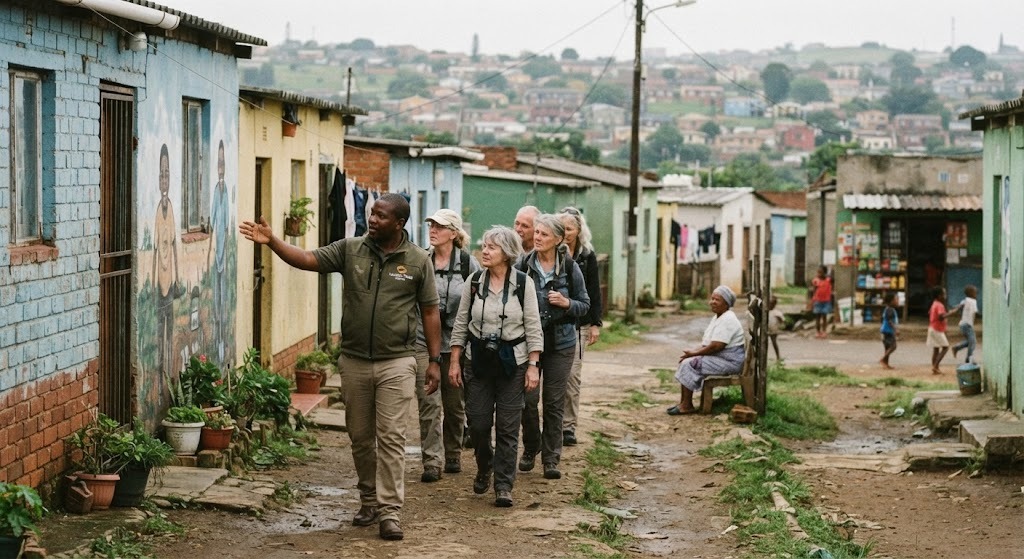
I book township tours the way I book restaurants: by how long the operator has lived on the block. Gcinokuhle Kenneth Dube was born and raised in Cato Manor, seven kilometres west of Durban's centre, and his company Loxtion Tours has been running the neighbourhood since 2017. That is the selection rule for this piece - guides who live where they walk - and the Cato Manor day is the route I would put first for visitors who already have the beach and the big five booked.
What follows is the walk in the order Dube runs it, with the reason each stop earns its slot.
uMkhumbane Cultural and Heritage Museum
The day opens at the museum on uMkhumbane, the cultural heart of Cato Manor where Zulu and Indian households still share the same streets. The museum charts the area's history from the 1914 subdivision of Durban's first mayor's land through the informal settlement boom, the friction with authorities, and the forced removals that emptied the township. Beside the museum sits the crypt of Queen Thomozile Jezangani kaNdwandwe, mother of the late King Goodwill Zwelithini.
- Start here for the background, not the photographs. The exhibits give the rest of the day its vocabulary: names, dates and street names that stop the later stops from blurring into generic township scenery.
- Ask about the land subdivision. Cato Manor was named after Durban's first mayor in 1914; he subdivided and sold parcels to prominent Indian residents, and the settlement that grew after industrialisation drew workers faster than the plot layout planned for.
Heroes Acre and the names that anchor the walk
Heroes Acre is the cemetery where several South African stories share one fence: Bafana Bafana captain Senzo Meyiwa, anti-apartheid journalist Nat Nakasa, and playwright, composer and director Dr Mbongeni Ngema all rest here.
- Let the graves set the narrative stakes. Dube keeps the politics out of the storytelling and lets the names do the work, which is why the stop lands with international visitors who arrive knowing nothing about the removals.
Church, community leader, and the Reed Dance pipeline
From Heroes Acre the route moves to one of Durban's oldest Catholic churches, which played a visible role during the struggle years, and then to a local community leader who prepares Zulu maidens for the annual Reed Dance.
- Book the morning slot if the Reed Dance season is close. The preparation house only runs at full colour in the weeks before the ceremony; outside that window it is a quieter conversation about protocol and dress.
The healer, the sangoma, and the contrast stop
A visit to the Pavilion, the province's second largest regional mall, is placed deliberately against what follows: a local healer explaining traditional medicine, and a sangoma willing to throw bones for visitors.
- Keep the mall stop short. Twenty minutes is enough to register the contrast; the tour's value sits with the healer and the bones, not the escalators.
- Bring small notes for the offering. Ritual visits run on reciprocity; the guide will tell you the expected amount on the day.
Indian heritage and the food that ends the argument
Cato Manor's Indian side comes next: peaceful temples, religious artefacts and the lifestyle that grew from the 1914 land sales. The tour closes at Mojo's Carwash, where Indian cooking and shisanyama - braaied meat Durban is famous for - arrive on the same table.
- Arrive hungry; the food stop is the payoff. Dube times Mojo's for the end of the day deliberately: history works better when it ends in a plate you remember.
How to book, and what else Loxtion runs
Loxtion Tours also runs shorter add-ons to uShaka Marine World, Phezulu Safari Park, Tala Game Reserve and Giba Gorge on request, and the operator works with cruise lines and travel agencies alongside direct bookings. Dube's own story - radio ambitions in childhood, a switch to tourism at the end of school, accreditation through the local tourism association, listing on the Durban and provincial supplier databases - is the reason the logistics run smoothly: he built the business by linking to the car hire, shuttle and accommodation operators who came before him.
| Stop | Why it earns the slot |
|---|---|
| uMkhumbane museum | Names and dates for everything after |
| Heroes Acre | The human stakes of the removals era |
| Church and Reed Dance house | Faith and living ceremony, not only history |
| Healer and sangoma | Practice, not performance |
| Mojo's Carwash | Zulu and Indian Durban on one plate |
If one stop has to lead, it is the uMkhumbane museum: every grave, church and plate on the route reads sharper after the museum has put the street names and the removals on the record. Walk in there first, and the afternoon explains itself.
The tour's logistics are deliberately simple: a morning pickup, the museum first, then a slow west-to-east walk through the neighbourhood with pauses at each stop. Dube keeps groups small - under fifteen people - which is why the conversation at Heroes Acre stays a conversation rather than a lecture. I have walked this route twice, and the second time I noticed details the first pass had flattened: the painted memorials, the sound of the market bleeding through the church wall, the way the shisanyama smoke announces the end of the day before you see it.
What separates this operator from the bus-tour versions is the timeline. Cato Manor's story runs from the 1914 land subdivision through the informal settlement boom of the 1940s and 1950s, the friction with authorities, and the forced removals that emptied whole blocks. Dube anchors that arc to specific names and streets rather than general statements, which is why the walkway at the museum and the graves at Heroes Acre feel like chapters of the same narrative rather than separate stops.
For visitors combining this with Durban's beachfront, the practical window is a full day - leave the city centre by eight, and expect to be back by late afternoon. The route covers roughly seven kilometres of walking over the course of the day, with vehicle transfers between the more distant stops. Comfortable shoes matter more than camera gear; the surfaces are uneven in places, and the museum floor is polished concrete.